

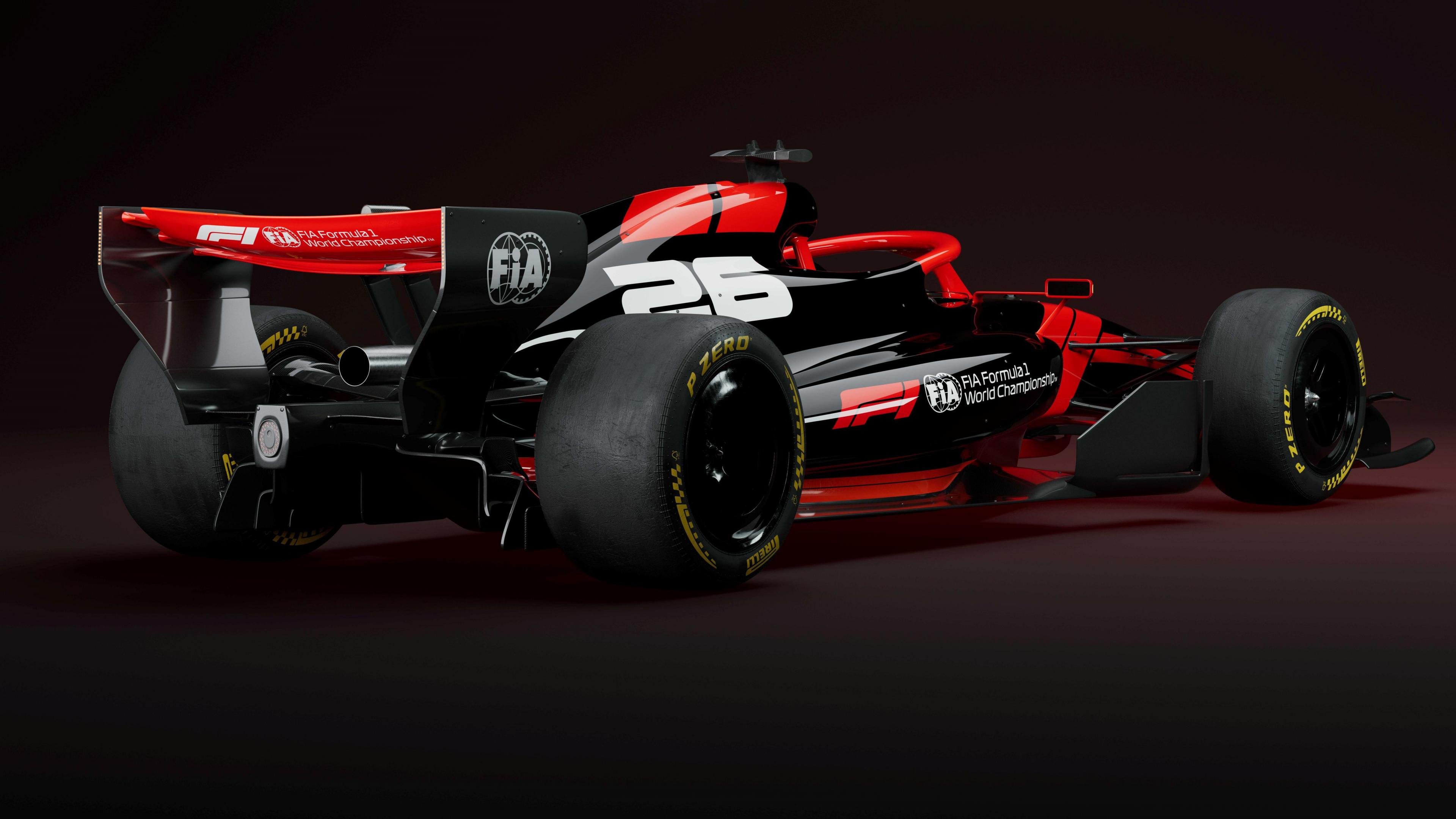
The vehicles for the 2026 season are set to be smaller, nimbler and more environmentally friendly compared to current models.
F1 has revealed the new terminology that will be used to describe the advanced features of its new 2026 technical rules.
The sport is introducing what is potentially the largest rules overhaul in its long history starting in 2026, featuring fresh chassis and power unit regulations and the compulsory introduction of eco-friendly fuels.
The new power units, which maintain the 1.6-litre V6 configuration, boast a greatly enhanced battery power, necessitating major innovations in the vehicles' aerodynamic design.
Over a race distance, drivers will tactically deploy electrical energy – including during hot laps – to achieve the best performance.
Extensive fan consultation were carried out with a wide range of fans, including new, casual and core fans, to understand which terminology would aid comprehension of the main elements of the 2026 changes.
The key objective was to make a set of intricate technical aspects of the competition as straightforward as possible for the global fanbase.
Consequently, older technical labels for some systems – such as "modes labelled X and Z" for the moveable wings – have been discarded in favour of straightforward terms that succinctly convey the primary purpose of the system.
Exploring the New Tech
According to rule-makers that racers will have more power to make decisions regarding battery management, regeneration, and conservation.
The upcoming changes feature a series of modes that will be clearly indicated on TV overlays to aid the fans' insight of the race battle.
- Attack Mode: This supersedes the existing Drag Reduction System. It provides a surge of additional ERS power available when a competitor is less than a second the leading car to execute an overtaking maneuver.
- Boost Mode: This is a on-demand energy deployment from the energy recovery system that can be utilized during attack or defence. It provides the pilot peak output at the push of a button.
Both of these key functions will have to be managed carefully, as the available electrical charge is strictly limited.
- Active Aerodynamics: Both the car's wings change configuration – opening on the high-speed sections for reduced drag and top speed, and closing in the bends for optimal cornering performance.
- Recharge: Drivers can harvest energy with regenerative braking, or during throttle lift at the conclusion of a straight or in sections where only limited engine output is applied.
2026 Car Specifications
The vehicles for the new era will be more compact and lighter compared to the 2025 spec, with a wheelbase reduced by 200mm to 3,400mm, overall width reduced by 100mm – down to 1,900mm – and the minimum weight lowered by 30kg.
Overall downforce is projected to decrease by approximately a significant margin, although teams will undoubtedly recover some as they optimize their packages.
Aerodynamic drag has been cut by 40%. The cars will feature active aerodynamics – front and rear wings will move on the straights to improve speed and increase straightline speed and return into place for optimal grip in corners.
Tyres will continue to use 18-inch wheel rims, but the tyres themselves will be narrower, by 25mm at the front and 30mm at the rear.
Power Unit Revolution
The new power units will have an near-equal balance in horsepower generated by the petrol engine and the battery and motor, a rise from about one-fifth electric power this year.
The energy recovery system is simplified through the elimination of the MGU-H, the sophisticated and pricey unit that generated electricity from the turbo.
Cars will be obliged to compete on carbon-neutral fuel, produced using organic sources or lab-created processes.


